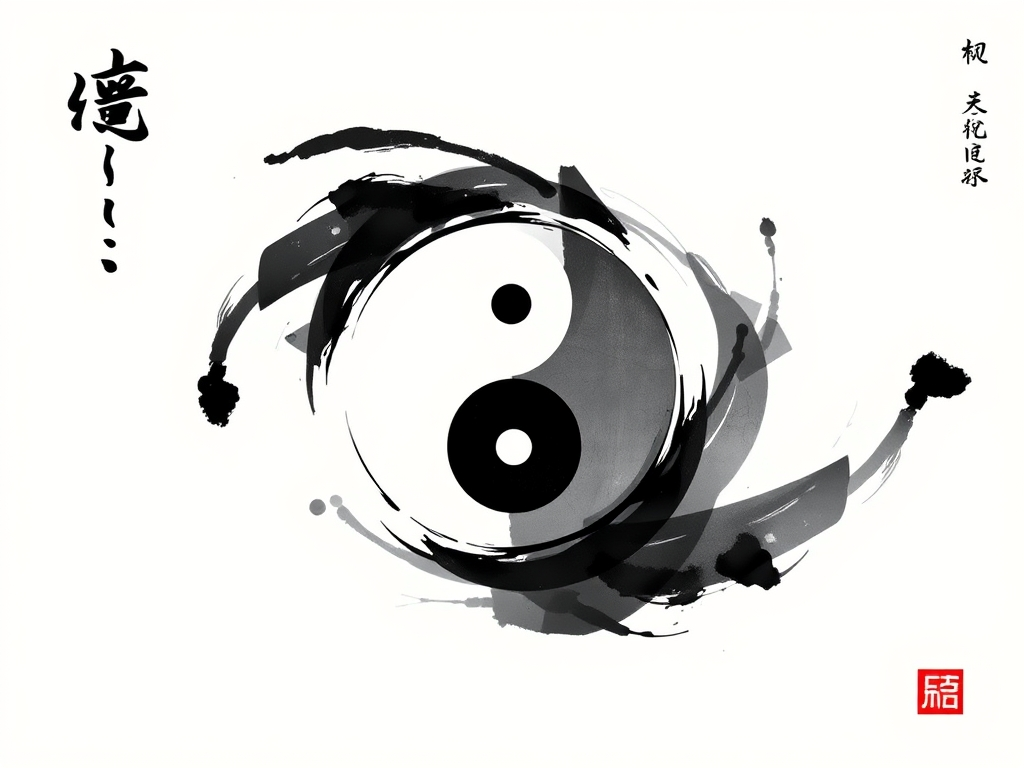
One of the quickest ways to misunderstand Chinese metaphysics is to read it as a search for the perfect chart, the perfect home, or the perfect day. In traditional thought, the goal is rarely perfection. It is balance: a workable proportion of qualities that supports the life in front of you. The distinction is not cosmetic; it changes how every tool in the system is used.
Perfection assumes there is a single correct arrangement. Balance assumes the correct arrangement depends on context, and that it can change with season, age, and circumstances. A chart that looks imbalanced on paper may function well in its season, and a home that is not flawless may be exactly right for the people living in it.
The Difference in Practice
In BaZi, the question is not whether a chart is good but whether its elements support each other in the current period. A strong Day Master without an outlet can be more difficult than a moderate Day Master with a healthy cycle. In feng shui, the question is not whether a room matches a textbook but whether its balance serves the people who use it. In timing, the question is not whether a day is lucky but whether its energy suits the action.
Perfection thinking asks "is this correct?" Balance thinking asks "does this work, for whom, and when?" The second question is the one the tradition actually answers. For the foundational idea of balance, read Yin and Yang in Plain English and The Concept of the Middle Way.
Why Imbalance Is Normal
Every real chart, room, and calendar contains imbalances, because real life is not evenly distributed. A person born in winter has a chart shaped by winter; a home built on a slope has the shape it has; a year always has seasons of intensity and rest. The tradition treats these imbalances as starting conditions, not flaws to be ashamed of.
The practical consequence is that adjustment, not transformation, is the goal. You do not rebuild a chart or a house to make it perfect; you adjust the parts that are causing difficulty, often with small changes. For how that works in one system, read How to Use the Five Elements in Daily Life.
A Checklist for Balance Thinking
When you catch yourself aiming for a perfect arrangement, run this checklist:
- Name the function: what is this chart, room, or timing supposed to support?
- Describe the current balance instead of judging it good or bad.
- Identify the one or two pressures that cause the difficulty.
- Choose a small adjustment that addresses the pressure.
- Test the adjustment and repeat the cycle.
The checklist replaces the question "is this perfect?" with "does this work?" It also makes the practice experimental, which is how you learn. For the habit of testing rather than believing, read The Value of Scepticism in Study.
Common Misconceptions About Balance
The first misconception is that balance means equal amounts of everything. A balanced chart or room is proportioned for its purpose, not mathematically even. The second misconception is that an imbalanced arrangement is unlucky. Imbalance is a description of pressure, and pressure often produces growth. The third misconception is that balance is permanent.
Balance shifts with season, age, and circumstance, which is why the tradition returns to the same questions again and again. A room balanced in summer needs adjustment in winter; a chart read at thirty differs from the same chart at sixty. For the seasonal side of that idea, read The Concept of Season in a Life.
Balance in Practice Across the Systems
Each system applies the same principle differently. BaZi asks which elements need support in the current period. Qimen asks which palace deserves attention in this hour. Feng shui asks what a space needs to support its purpose. Daily guidance asks what the season is asking of you. In every case, the answer is a working adjustment, not a final verdict.
This is why the systems are described as languages rather than rulebooks. Languages adapt to context; rulebooks do not. For how the systems fit together, read How the Major Systems Fit Together.
A Worked Example
A person with a Fire-heavy chart and a Fire-heavy living room feels restless in both. A perfection-minded reading would call the chart difficult and the room wrong. A balance-minded reading asks what each needs: the chart may need more Water and Metal to give the Fire somewhere to go, and the room may need a darker, cooler corner for rest. Both adjustments are small, and both are tested over a few weeks.
The two readings of the same facts show the whole difference: one judges, the other adjusts. For more on the philosophy behind this, read The Concept of the Middle Way and browse the general library.
Balance as a Habit
Balance thinking is a habit you can build in daily life. When a project stalls, ask what it needs rather than what is wrong with it. When a room feels wrong, name the function before judging the decor. When a year feels difficult, ask what kind of work it is asking for instead of cataloging its failures. Each question is small, and together they train the same muscle the tradition uses.
The habit also protects you from the perfection trap in the other direction: the belief that every imbalance must be fixed immediately. Some pressures are seasonal and will pass; some imbalances are productive and should be left alone. Balance includes the judgment of when to adjust and when to wait, and that judgment only grows with practice and observation.
FAQ
Is a balanced chart the same as a good chart?
No. Balance means the elements work together in the current period, which is a functional description, not a moral one.
Does balance mean equal amounts of everything?
No. Balance is proportioned for purpose and context, which often means deliberate asymmetry.
Can an imbalanced room or chart be fine?
Yes. Imbalance describes pressure, and pressure can be productive when it is understood and managed.
How do I know when something is balanced?
You test it: the arrangement works when it supports the function, and you adjust when it does not.