For many beginners, generating the chart feels like the big moment. Then the chart appears on screen and the real feeling is often confusion. There are symbols, pillars, elements, and terms you may not understand yet. That is completely normal. The most useful thing after generating your BaZi chart is not to panic or chase immediate conclusions. It is to follow a calm order of observation.
A good first reading is simple. You are not trying to solve your whole life in one sitting. You are trying to understand the basic structure well enough that the chart begins to feel readable. Once that happens, the deeper layers become much more approachable.
Step One: Confirm the Birth Data
Before interpreting anything, confirm the chart was generated using the correct birth date, birth time, and time zone. Many mistakes in self-study begin here. If the hour is wrong, the hour pillar changes. If the time zone handling is off, the chart may not reflect the actual birth moment correctly.
This may sound technical, but it is essential. It is much better to spend a few extra minutes verifying the input than to build interpretation on unstable data. Accuracy at the beginning prevents unnecessary confusion later.
Step Two: Find the Day Master
Once your chart is confirmed, identify the Day Master. This is the Heavenly Stem on the Day Pillar and one of the main anchors for understanding the chart. The Day Master represents the self in BaZi. From that point, the rest of the chart is interpreted in relationship.
Do not treat the Day Master like a complete personality label. It is a starting point, not a full summary. What matters next is whether that Day Master has support, what season it is born in, and how the surrounding chart shapes its expression.
Step Three: Look at the Four Pillars as a Structure
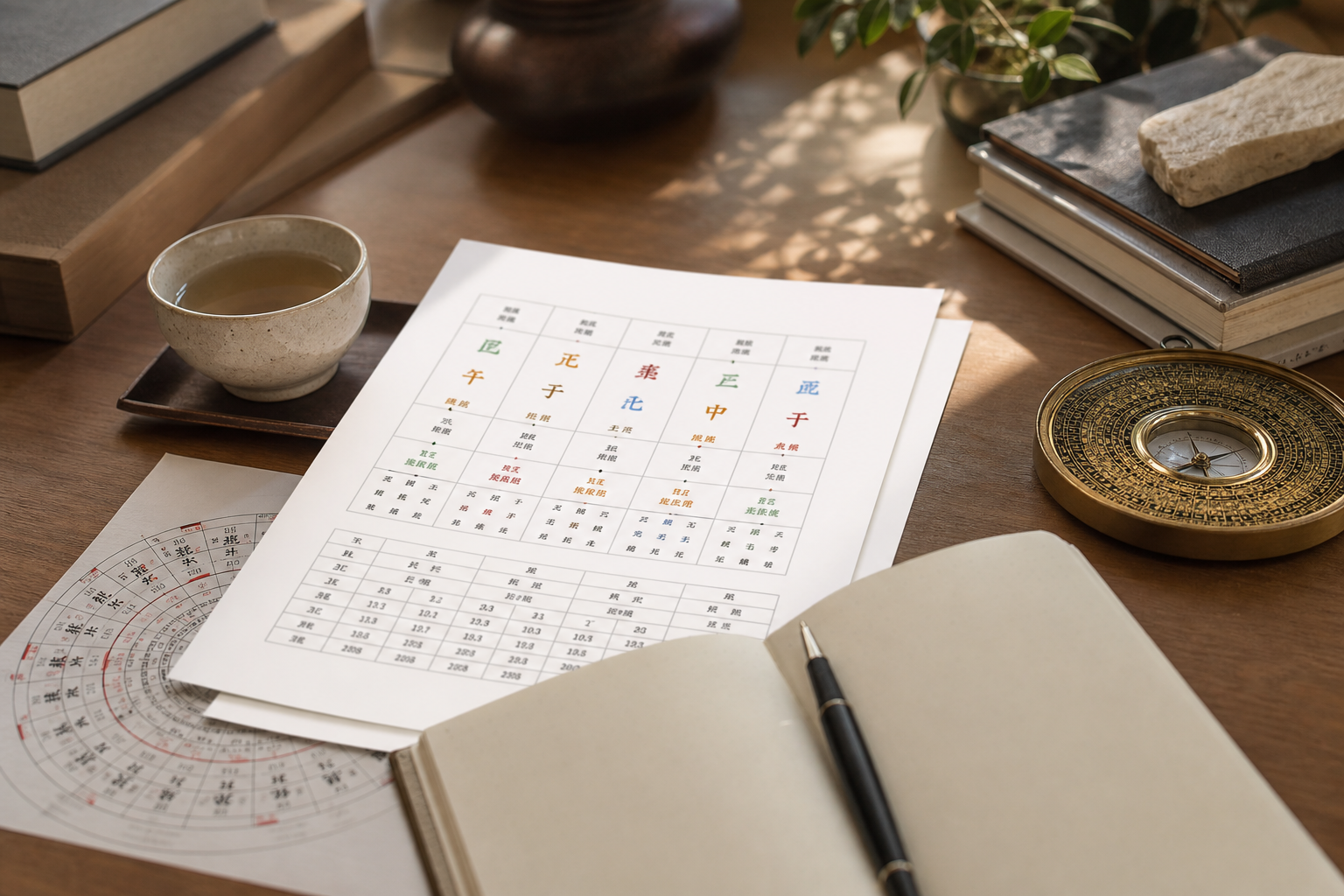
After finding the Day Master, step back and look at the chart as a whole. Notice the year, month, day, and hour pillars. You do not need to decode every hidden layer immediately. Instead, ask basic structural questions. Which elements repeat? Which ones seem absent? Does the chart look balanced, crowded, or one-sided?
This kind of high-level observation is extremely helpful for beginners. It teaches you to see the chart as a pattern rather than as a pile of symbols. That shift alone makes later study much easier.
Step Four: Resist the Urge to Judge Too Fast
A new chart often triggers emotional reactions. Some people see a symbol online and assume it means they are unlucky, weak, incompatible, or blocked. This is one of the least helpful ways to begin. BaZi is technical before it is emotional. Labels like strong, weak, clash, or control have to be read inside the structure.
The most useful beginner posture is patience. Let the chart teach you its logic before deciding what it says about your life. Otherwise, you will mostly end up reading your own anxiety into it.
Step Five: Ask Better Questions
Once the basic structure is visible, ask narrow questions. What does this chart suggest about my natural rhythm? What kind of support seems important? Why might I struggle in certain environments? Where should I be more patient with timing? Questions like these keep BaZi practical.
This is also the point where many readers decide whether they want to keep self-studying or seek a professional reading. There is no single right answer. What matters is knowing whether you want a guided interpretation or a slower self-led learning path.
FAQ
What is the first thing I should look at in my chart? Start with the Day Master, then look at the four pillars and the overall balance of the chart.
Should I trust random chart interpretations online right away? Be careful. Many chart snippets strip away context, and BaZi depends heavily on structure and relationship between symbols.
Do I need a professional reading immediately? Not necessarily. Many people benefit from learning the basics first, then deciding whether they want deeper guided interpretation.
What to Do Next
After generating your chart, keep your first study session simple. Confirm the data, identify the Day Master, observe the chart pattern, and write down two or three real questions you want the chart to help you think about.
From there, you can keep learning through foundational articles, or move toward a more guided reading if you want help connecting the chart to your life season with more nuance.